

Journal · 18 May 2026
You are probably storing it wrong
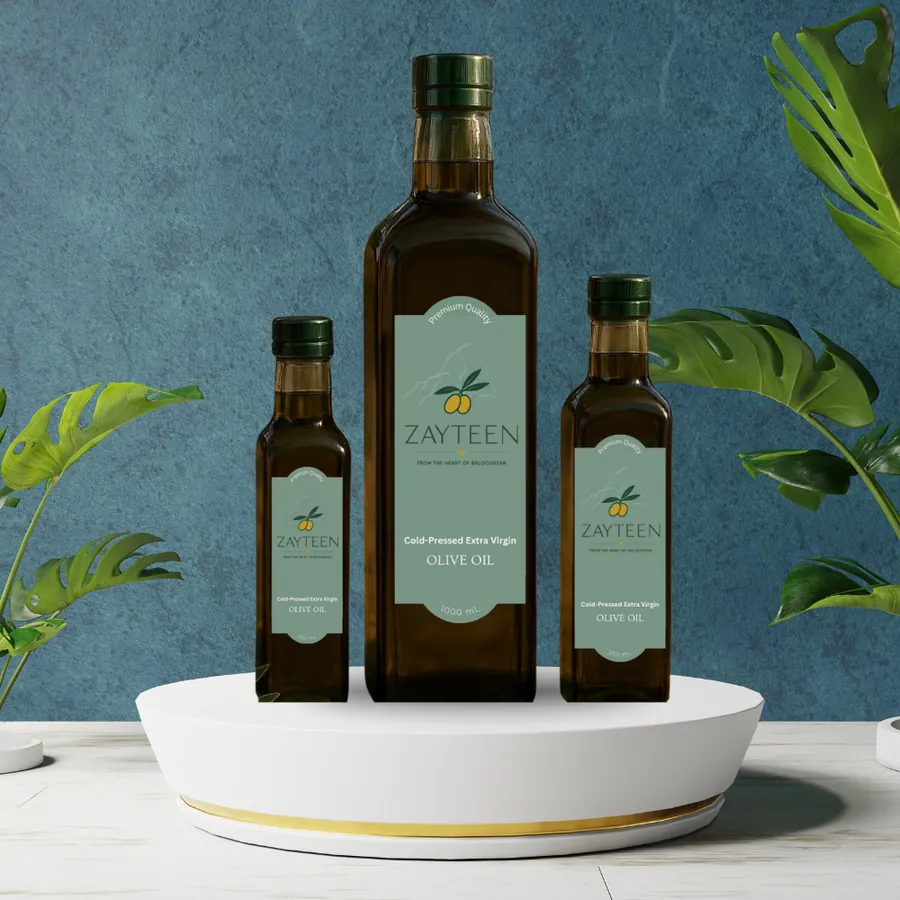
The most common place people keep olive oil is on the counter next to the hob, within arm's reach of the pan. It is convenient, and it is the worst spot in the kitchen.
Three things degrade olive oil
Light is the fastest. Ultraviolet exposure breaks down polyphenols and chlorophyll and starts oxidation. Clear glass bottles on a sunlit shelf are doing measurable damage within weeks, which is why anything we sell goes into dark glass and why we would treat a clear bottle as a warning sign.
Heat is next. Every ten degrees roughly doubles the rate of the chemical reactions involved. A cupboard above the stove is regularly ten to fifteen degrees warmer than the rest of the room, which quietly halves the useful life of the bottle inside it.
Oxygen is the slow one. Every time you open the bottle you let air in, and the more headspace above the oil, the more oxidation is going on. This is the real argument for buying a size you will actually finish, rather than the largest one available.
Where to put it instead
- A closed cupboard, away from the stove and the oven, ideally on an interior wall.
- Cap on tight between uses. Not resting on top, actually screwed down.
- If you cook with it constantly, decant a week's worth into a small bottle and keep the main one closed and cool.
- Finish an opened bottle within about three months. It stays safe far longer, it just stops being interesting.
The fridge question
Do not refrigerate it. Olive oil clouds and forms soft white sediment when it gets cold, which alarms people who think the bottle has spoiled. It has not, it clears completely at room temperature and nothing is lost. But repeatedly cooling and rewarming introduces condensation, and water in olive oil encourages exactly the microbial problems you were trying to avoid.
Incidentally, the old folk test of putting oil in the fridge to see whether it is "real" does not work. Different varieties solidify at different temperatures, and plenty of genuine extra virgin oils stay liquid.
How to tell it has gone
Rancid olive oil smells like crayons, putty, or old walnuts. It tastes greasy and flat, with none of the pepper at the back of the throat. It will not make you ill, but it has lost the antioxidants that were most of the reason to buy it.
If you open a bottle and smell nothing much at all, that is the answer. Fresh oil announces itself.
Buy a size you'll finish
250ml, 500ml and 1 litre, all in dark glass with the pressing date on the label.
See the sizes